



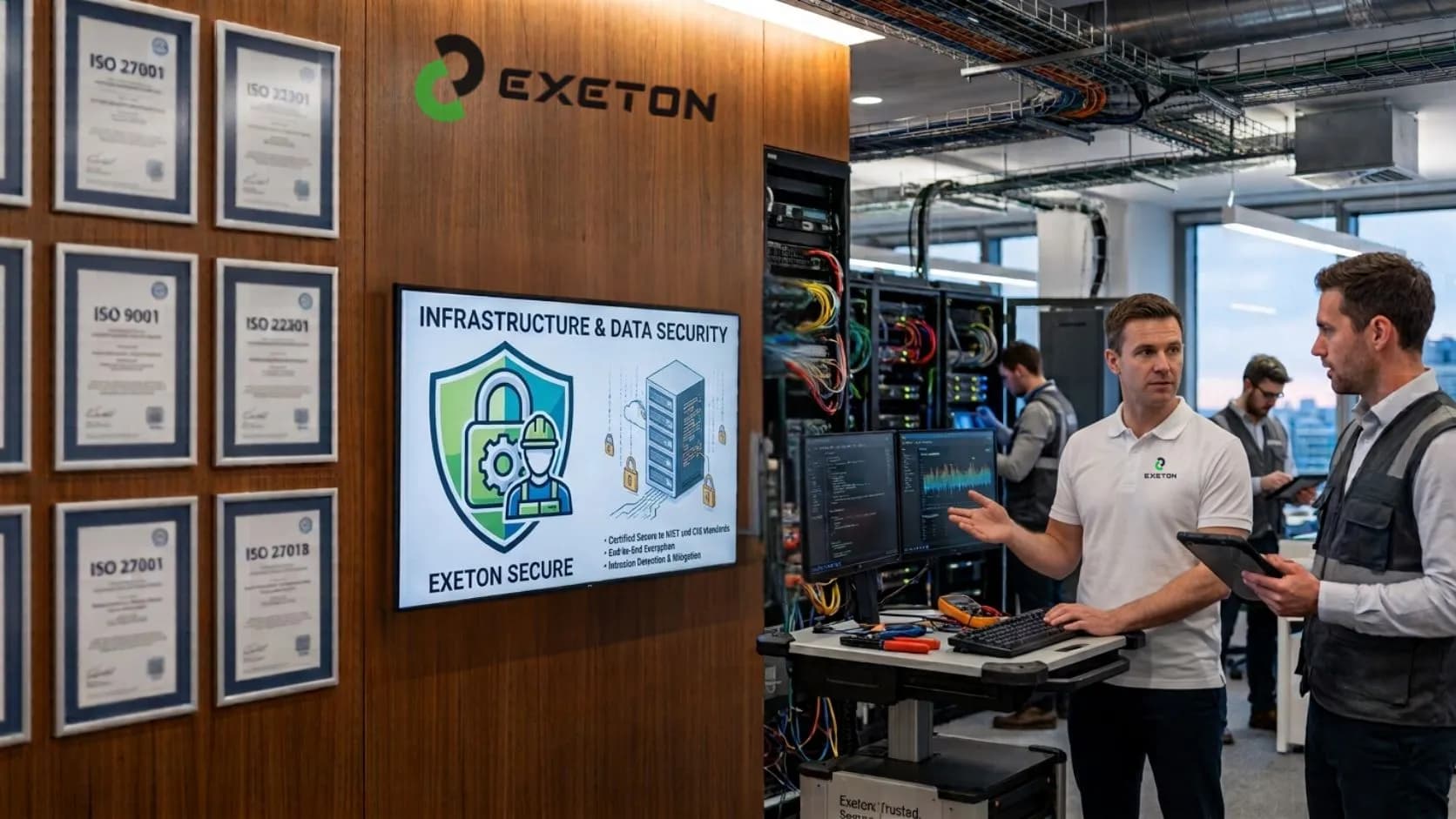
Is Your AI Development Pipeline Leaking Your Cloud Credentials?
Did you know that a single line of compromised code in an open-source library can silently hand over the master keys of your corporate digital vault to hackers? This is not a hypothetical movie plot. Recently, the AI development community was rocked when a malicious backdoor was discovered in the popular mistralai PyPI package. The exploit was specifically designed to quietly steal critical cloud, GitHub, and CI/CD credentials the moment a developer imported the package.
At Exeton, we believe that building cutting-edge AI systems requires looking beyond pure computing speed. True performance is meaningless if the very foundation of your software pipeline is leaking your most sensitive corporate assets. Whether you are a high-level technology decision-maker, an executive handling sensitive public data, or a curious tech enthusiast, understanding how these supply-chain attacks work is critical to protecting your business.
What Exactly Is an AI Supply-Chain Attack?
An AI supply-chain attack is a cyberattack where hackers compromise trusted open-source software libraries, such as Python packages used for machine learning to inject malicious code that automatically runs when developers download or import the tool.
When your developers build artificial intelligence models, they rarely write all the code from scratch. Instead, they rely on massive, public ecosystems like PyPI (Python Package Index) or npm. Attackers exploit this trust.
By sneaking malware into popular, legitimate packages like mistralai, cybercriminals can bypass traditional firewalls. The moment a developer types import mistralai on their local workstation or inside a cloud-hosted development environment, the hidden malware activates. It immediately searches the system for passwords, digital keys, and cloud access tokens, sending them back to the hacker's server.
Why Should Non-Technical Business Leaders Care About a Code Leak?
Business leaders must care because compromised developer credentials grant hackers administrative access to sensitive company databases, which can lead to catastrophic compliance penalties, legal liabilities, and permanent loss of public trust.
To a non-technical manager, a "leaked credential" might sound like a minor IT problem. However, these credentials are the digital passports to your entire business operations. If your AI team is working with highly sensitive records, a single compromised pipeline can expose your entire customer base.
Let's look at how this impacts critical, real-world industries:
Real Estate & Government Portals (e.g., Dubai Land Department - DLD): If an AI tool used to analyze property trends is compromised, hackers can gain backend access to land registries, transaction histories, and private investor passport copies.
Healthcare Systems & Hospitals: Healthcare databases contain highly protected Patient Health Information (PHI). A leaked credential could allow malicious actors to steal patient records, resulting in massive legal fines and halting critical hospital operations.
Enterprise Cloud Environments: Stolen administrative keys allow hackers to spin up expensive unauthorized computing tasks, run ransomware, or steal proprietary trade secrets.
How Do Different Industries Suffer from Data Leaks?
To understand the real-world gravity of these supply-chain vulnerabilities, we can compare how a single developer leak ripples across different sensitive sectors:
Industry Sector | Typical Data at Risk | Primary Consequences of a Leak | Evolving Risk Level in 2026 |
Healthcare & Hospitals | Patient medical histories, social security numbers, private health conditions. | High regulatory fines, class-action lawsuits, compromised patient safety. | Critical (Hospitals are primary ransomware targets) |
Real Estate & Gov (e.g., DLD) | Title deeds, investor financial records, passport copies, transaction contracts. | Severe loss of international investor trust, fraud, regulatory penalties. | High (Real estate portals hold massive capital data) |
Corporate AI Startups | Proprietary algorithms, source code, customer database keys. | Total loss of intellectual property, business bankruptcy, brand destruction. | High (Fast-moving teams often skip security audits) |
To prevent these scenarios, Exeton helps organizations construct secure, isolated computing environments that limit exposure to external threats from the ground up.
How Can Your Team Secure Its AI Development Pipeline Today?
Your team can secure its AI pipeline by immediately auditing dependency trees, implementing strict package pinning, using private package repositories, and continuously monitoring for leaked credentials.
Protecting your company from modern supply-chain attacks requires a shift from passive trust to active verification.
You can safeguard your workflow by implementing these fundamental security practices:
Conduct Immediate Dependency Audits: Instruct your technical team to run security scanners on all active Python and JavaScript environments to ensure no backdoored versions of third-party libraries are running.
Enforce Strict Dependency Pinning: Never allow development systems to automatically download the "latest" version of a package. Pin your installations to specific, verified version numbers that have been cleared by your security team.
Utilize Private Artifact Repositories: Route all package downloads through an internal, private repository that pre-scans open-source tools for malware before they reach a developer's workstation.
Isolate High-Performance Environments: Keep your heavy training and inference workloads separated from your primary company network.
How Exeton Secures Your AI Pipeline (And What You Can Buy Today)
When open-source packages are backdoored, the best defense is absolute isolation. At Exeton, we bridge the gap between complex software dependencies and raw physical hardware by enabling you to build fully private, secure, and even air-gapped (completely offline) computing environments.
If your developers are writing code on local workstations that connect directly to our servers, you can configure your cluster to block external internet access entirely. This ensures that even if a developer accidentally imports a malicious package, the malware has zero ability to dial home or leak your cloud credentials.
If you are ready to secure your AI development pipeline with local, powerful infrastructure, here is what you can order from Exeton right now to keep your data safe:
Enterprise Hardware Ready for Deployment
These systems are built to deliver predictable, secure performance. Your team can request custom configurations directly through Exeton:
Supermicro NVIDIA H200 SYS-821GE-TNHR (8U X13 8GPU) Server: The gold standard for demanding, local AI training and inference. Keeping this beast offline ensures absolute data privacy.
NVIDIA DGX Spark: A compact, desktop AI supercomputer built specifically for local AI development. It powered by the Grace Blackwell Superchip and delivers up to 1,000 AI TOPS of performance right beside your desk without requiring public cloud integration.
Supermicro SuperServer SYS-522GA-NRT (RTX PRO 6000/L40s): Optimized for reliable, local workloads where predictable performance, certification, and compliance are paramount.
Frequently Asked Questions
What is the easiest way to prevent dependency leaks in our office?
The simplest step is to enforce dependency pinning (locking down exact package version numbers) and use an internal, private repository to pre-scan all public PyPI or npm downloads before your development team can use them.
Why is local AI hardware safer than the public cloud?
When you use a public cloud, your data and access credentials travel over the internet. Local hardware, like a dedicated Exeton server, can be completely cut off from the public internet (air-gapped), preventing remote access and unauthorized data leaks.
Can we customize our server configuration before buying?
Yes! Every AI workload is different. Our engineers at Exeton custom-build, test, and pre-configure every server system specifically for your team’s compute, storage, and networking needs. You can share your workload requirements with us, and we will handle the rest.
Conclusion: Building a Safer Future for Enterprise AI
As artificial intelligence continues to reshape how we manage everything from medical diagnostics to national real estate transactions, data security can no longer be treated as a secondary priority. Software supply-chain exploits are a sophisticated threat, but they are entirely preventable with the right combination of secure infrastructure and vigilant development practices.
At Exeton, we specialize in helping businesses design, build, and deploy robust enterprise AI solutions that prioritize performance alongside rigid security guidelines. By taking proactive steps to secure your development pipelines today, you protect your customers, secure your proprietary data, and ensure your business is fully prepared to lead in the digital era.
Are you confident that your current AI setup is fully protected against emerging supply-chain vulnerabilities? Reach out to the team at Exeton to audit your infrastructure and secure your digital assets today.